
-
ASA Voting on Proposed Amendments
If you wish to exercise your right to vote as a member of the American Simmental Association, here’s a step-by-step on how to submit your ballot on the proposed Amendment changes by January 6, 2025. Keep in mind, you can vote in person at the Annual Membership Meeting in Denver on January 17, 2025 at 6pm but the easiest way to cast your ballot is via Herdbook Services online portal.
Log into your ASA Herdbook Services membership account. Under Account information you’ll see the blue button VOTE.

Next you will need to verify your password for Herdbook Services

Once verified you’ll arrive at the voting screen.

You can read all about the proposed amendments via the Amendment Guide but please consider voting “YES” on Amendment No. 3 to be able to add third party management to the bylaws so folks such as myself can operate as data managers with ASA on members behalf and be contracted as a business entity. The founding fathers were visionaries but who would have imagined we would be where we’re at today back in 1972.


Make sure to click the button to Confirm Vote. It then takes you to a summary screen and indicates you can print or save a copy for your records.
Reach out to ASA with any questions or issues you experience while voting. Thank you.

-
Fall 2024 News
It’s the time of year where the leaves are changing, folks are busy shipping, farming, weaning calves, kids are back in school playing football, volleyball and probably even pickleball nowadays, or maybe that’s still just the adults over 40. While all of that is going on and the daylight is getting shorter, if you have a bull sale in Jan-May 2025 and you have not shipped DNA in yet, please reach out to me if you have questions or to strategize on best way to get this completed so we are not up against your catalog deadline. Reminder, there’s no “expediting” DNA testing through ANY Association. We need to give ourselves at least 8 weeks from the time the sample enters into testing to have GE-EPDs. More animals (and samples) are being tested than ever before with the lab receiving upwards of 25,000 samples per day. In addition, if you’re taking animals to Denver or on the show circuit yet this fall, make sure to check the rules since quite a few breeds and shows are incorporating DNA testing requirements and we need to ensure animals are ready to be exhibited.

Sale Transfers
– If you sold animals in 2024 and need them transferred, there’s no time like the present. Send over the information and we’ll get those taken care of.
DNA Testing Materials
The preferred method of DNA sampling continues to be the Allflex Tissue Sampling Units (TSUs). For Simmental members, ASA continues to hold steady at $22.00/box of 10 plus shipping costs. Let me know how many and I can coordinate placing an order for you. For all other breeds (or Simmental members if you get in a pinch) Data Genie has TSUs available for the same price as ASA, plus shipping. If you find yourself in need of an Applicator let me know, we will try and find a deal for you. It is best to get your TSUs requested if you’re going to be working animals in the next 3 months, don’t wait. They do not go bad if stored at room temperature so no worries if it takes a bit until you use them. Better to have them on hand when needed rather than to have to pay exorbitant expedited shipping costs.
Simmental Members
Annual Service Fees (ASF) has been invoiced to your accounts as of July 1, 2024 to remain active members these dues must be paid by October 17, 2024. Log-in to your ASA account and pay the balance due today. Accounts with outstanding AMFs will be switched to inactive status on October 17. In addition to paying your AMF, at least one animal record must be registered and/or transferred within the last two years to keep your account active.
Spring Herds
– If you have completed weaning, please gather the records and let’s go ahead and get them reported into the database. Reminder that if you want RightChoice scoring on your calves from Allied/Top Genomics, they need to have weaning weights recorded (in addition to having GE-EPDs) and that have went through IGS BOLT evaluation so that can take up to 2 weeks depending on when the weights get reported.
– Mature Cow Weights and Body Condition Scores (BCS) should be collected within 45 days of weaning. It is not critical to weigh the older cows each year, but IT IS important to capture a weight on the first calf heifers after they’ve weaned the first calf. Older females can be weighed every few years to ideally have 2-3 weights taken over their productive life. If you need a copy of the BCS guidelines let me know.
Fall Herds
– We need to report yearling weights and update disposal codes for calves that were not kept in the herd. If you need a template let me know or just send me the data you have and we’ll get it reported/updated.
– Fall 2024 calving records can be sent to us anytime after you finish up calving. If you want (or have) collected TSU samples on the calves we can certainly get those tested through Calf Crop Genomics (CCG) once the calves have ASA numbers assigned. It’s never to early to get this done.
– Reminder – for birth weight measurements, if you use a hoof tape instead of a scale we need to know that so we can record the weight type as “T” for tape.
– DNA samples should be collected as soon as possible if you plan on participating in Calf Crop Genomics (CCG). A reminder, the participation requirement is to submit a sample on at least 90% of the calves that are reported to the association for that season. For example, if you have 110 females enrolled in spring THE, 10 cows did not calve for various reasons (no calf reported), 50 dams had heifer calves and 50 dams had male calves. ASA is either going to require you to submit 90 samples or greater if you’re sending in both sexes at the same time OR if you are splitting shipping DNA in between males and females they would then require samples on >45 males and >45 females. This becomes very important!!!! so please collect samples on ALL calves and then once we’ve tallied up the numbers and can go through the data if you have enough samples, you can elect to not test a few if they are not needed.
Red Angus Members
Credit/Debit cards include a processing fee of 3% – from RAAA eNews
RAAA has multiple payment options to keep your account current:
– E-check (bank account and routing number)
– Credit/debit cards, includes a processing fee of 3%
– Mailing a check
The easiest way to make a payment is by logging into REDSPro> My Account > Billing/Payment > Pay Account Balance. Both E-check and credit/debit cards can be used for online payments. If you prefer not to pay online, you can mail a check or by call the membership department at 940-387-3502, ext. 7. If mailing a check, please include your account number on the memo line.Fall 2023 Calf Data due by October 18th to RAAA
Every female enrolled in THR for 2023 Fall needs to either have a calf reported or a reason code if she does not have a calf to report. Failure to report this information will result in a dam being inactivated. Once a dam is deactivated the cost to add her back in within 6 months is $50.00 and after that, it’s $100.00. Pretty stiff penalty so let’s make sure to get those records cleared up if you received a “Fall No Progeny” report from RAAA in August, reach out with the missing data and we’ll get it done.
Data Reporting Reminders
Fall Herds
– We need to report yearling weights and update disposal codes for calves that were not kept in the herd. If you need a template let me know or just send me the data you have and we’ll get it reported/updated.
Spring Herds
– DNA samples should be collected as soon as possible on calves and you can store at room temperature until you’re ready to move forward with testing.
– Mature Cow Weights and Body Condition Scores (BCS) should be collected within 45 days of weaning. It is not critical to weigh the older cows each year, but IT IS important to capture a weight on the first calf heifers after they’ve weaned the first calf. Older females can be weighed every few years to ideally have 2-3 weights taken over their productive life. If you need a copy of the BCS guidelines let me know.
Angus Members
Data Reporting Reminders
Fall Herds
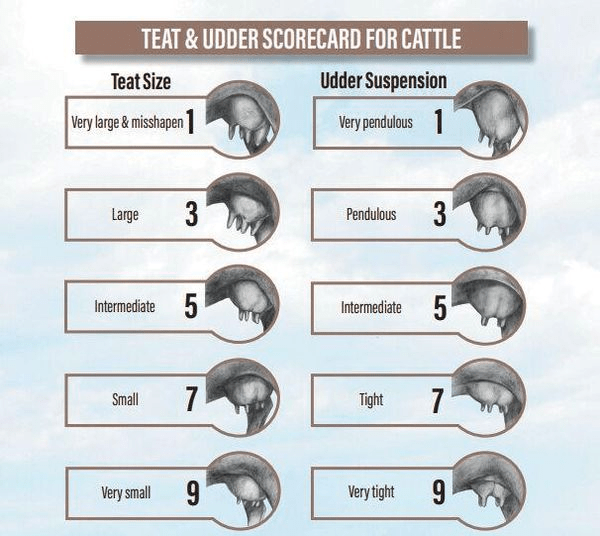
– Collecting Teat and Udder Suspension scores within 24 hours of calving and making this part of your calving routine will benefit your EPD accuracy for this trait. If you have any questions on collecting this data, please let me know.
Spring Herds
– If you have completed weaning, please gather the calf records and let’s go ahead and get them reported into the database. There’s no time like the present. If we submit a registration on a calf prior to 4 months of age it’s $12.00 and 4-10 months is $14.00. This can reduce the cost of registration quite significantly.
*We encourage you to order your AI certificates on bulls you do not own once you’ve decided to move forward with registration, this prevents delays and lengthy suspends.
Don’t forget to send flush dates for each ET mating along with whether it was conventional or IVF.
– DNA samples should be collected as soon as possible on calves and you can store them at room temperature until you’re ready to move forward with testing.
– Speaking of DNA testing, if you have an idea of bulls or heifers going in for testing that may end up being collected or the donor pen we should add on the genetic conditions bundle to your AngusGS or HD50K since it’s $18.00 if added to an AngusGS or HD50K and run concurrently. Genetic condition testing is now required for all AI sire’s born after January 1, 2018 and Donor dams born after January 1, 2023. If we come back and run this after the fact, it’s $45.00 and takes ~4-6 weeks to complete.
Industry Tidbits
With the Farm Bill expired, farmers and ranchers face uncertainty. Outdated policies could kick in by 2025 if no action is taken. What does this mean for ag producers? – Western Livestock Journal
Take a closer look at $M versus $W – Angus Beef Bulletin
As always – reach out via email, text or phone for more information on any of the above.
-
Summer 2024 News

How are we a week away from August?! I know it’s crazy but if you have a catalog deadline in October, November or December, your DNA samples need to be in test or already done. Please reach out to me if you have questions or to strategize on best way to get this completed so we are not up against a deadline. Reminder, there’s no “expediting” DNA testing through ANY Association. We need to give ourselves at least 8 weeks from the time the sample enters into testing to have GE-EPDs. More animals are being tested than ever before, at some Associations as many as 3,000 per week so let’s get it done early if possible.
Sale Transfers
– If you have not sent me your sale transfer information from this spring, let’s aim to get that into us so we can submit them to the association since guidelines indicate transferring within 60 days is ideal.
DNA Testing Materials
The preferred method of DNA sampling continues to be the Allflex Tissue Sampling Units (TSUs). For Simmental members, ASA continues to hold steady at $22.00/box of 10 plus shipping costs. Let me know how many and I can coordinate placing an order for you. For all other breeds (or Simmental members if you get in a pinch) Data Genie has TSUs available for the same price as ASA, plus shipping. If you find yourself in need of an Applicator let me know, we will try and find a deal for you. It is best to get your TSUs requested now if you’re going to be working calves this fall, don’t wait. They do not go bad if stored at room temperature so no worries if it’s a few months until you use them. Better to have them on hand when needed than to have to pay exorbitant expedited shipping costs.
Simmental Members
Annual Service Fees (ASF) has been invoiced to your accounts as of July 1, 2024 to remain active members these dues must be paid by October 1, 2024. Log-in to your ASA account and pay the balance due or let me know if you would like an emailed copy of the invoice so you can print and mail a check for payment.
Fall Herds
– We need to report weaning weights and update disposal codes for calves that are not being kept in the herd. If you need a template let me know or just send me the data you have and we’ll get it reported/updated. Check for an email from Heidi this past week.
– Mature Cow Weights and Body Condition Scores (BCS) should be collected within 45 days of weaning. It is not critical to weigh the older cows each year, but IT IS important to capture a weight on the first calf heifers after they’ve weaned the first calf. Older females can be weighed every few years to ideally have 2-3 weights taken over their productive life. If you need a copy of the BCS guidelines let me know.
– Fall THE enrollments deadline to adjust your inventory is August 15, 2024. Send over any females which have been culled along with the reason code.
Spring Herds
– If you have completed calving, please gather the calf records and let’s go ahead and get them reported into the database. There’s no time like the present. If you’re planning on shipping in DNA samples then we must report all calves to the association prior to sending DNA and each female enrolled on THE either has to have a calf reported or reason why she didn’t calve (productivity code) for the given year/season.
– Reminder – for birth weight measurements, if you use a hoof tape instead of a scale we need to know that so we can record the weight type as “T” for tape.
– DNA samples should be collected as soon as possible if you plan on participating in Calf Crop Genomics (CCG). A reminder, the participation requirement is to submit a sample on at least 90% of the calves that are reported to the association for that season. For example, if you have 110 females enrolled in spring THE, 10 cows did not calve for various reasons (no calf reported), 50 dams had heifer calves and 50 dams had male calves. ASA is either going to require you to submit 90 samples or greater if you’re sending in both sexes at the same time OR if you are splitting shipping DNA in between males and females they would then require samples on >45 males and >45 females. This becomes very important!!!! so please collect samples on ALL calves and then once we’ve tallied up the numbers and can go through the data if you have enough samples, you can elect to not test a few if they are not needed.
Red Angus Members
EPD Evaluation Update (from Red Angus eNews 7/17/24)
As of July 15, DMI EPDs were transitioned from the CSU evaluation to the IGS evaluation. Due to this transition, the DMI EPDs will currently be updated on a monthly basis rather than the quarterly basis in which CSU traits are traditionally updated. Another difference is that the IGS evaluation includes genomic information for the DMI EPDs. This means that some animals may have experienced a change in their EPDs due to this additional information. However, the accuracy of DMI should increase, specifically on animals who have been genotyped. If you have any questions or would like further explanation on this adjustment, please contact Dr. Lindsay Upperman, director of breed improvement, at 940-387-3502, Ext. 29 or lindsay@redangus.org.
THR Fee Increase
Effective July 1, the Total Herd Reporting fee increased from the $27.50 fee to $28 annually per active cow (16 months or older). This was voted on by the RAAA board of directors in May 2024 to help with the ease of association accounting, as well as member accounting purposes to allow for even division by four when THR is billed in four installments. Spring 2024 THR was billed on July 12 at the new $28 amount along with annual membership dues.
Data Reporting Reminders
Fall Herds
– Mature Cow Weights and Body Condition Scores (BCS) should be collected within 45 days of weaning. It is not critical to weigh the older cows each year, but IT IS important to capture a weight on the first calf heifers after they’ve weaned the first calf. Older females can be weighed every few years to ideally have 2-3 weights taken over their productive life. If you need a copy of the BCS guidelines let me know.
Spring Herds
– If you have completed calving, please gather the calf records and let’s go ahead and get them reported into the database. There’s no time like the present. If you’re planning on shipping in DNA samples then we must report all calves to the association prior to sending DNA and each female enrolled on THE either has to have a calf reported or reason why she didn’t calve (productivity code) for the given year/season.
– DNA samples should be collected as soon as possible on calves and you can store at room temperature until you’re ready to move forward with testing.
Angus Members
Data Reporting Reminders
Fall Herds
– Mature Cow Weights and Body Condition Scores (BCS) should be collected within 45 days of weaning. It is not critical to weigh the older cows each year, but IT IS important to capture a weight on the first calf heifers after they’ve weaned the first calf. Older females can be weighed every few years to ideally have 2-3 weights taken over their productive life. If you need a copy of the BCS guidelines let me know.
Spring Herds
– If you have completed calving, please gather the calf records and let’s go ahead and get them reported into the database. There’s no time like the present. If we submit a registration on a calf prior to 4 months of age it’s $12.00 and 4-10 months is $14.00. This can reduce the cost of registration quite significantly.
*We encourage you to order your AI certificates on bulls you do not own once you’ve decided to move forward with registration, this prevents delays and lengthy suspends.
Don’t forget to send flush dates for each ET mating along with whether it was conventional or IVF.
– DNA samples should be collected as soon as possible on calves and you can store them at room temperature until you’re ready to move forward with testing.
Industry Tidbits
Beef Blueprints: The Role of Phenotypic Data in the Age of Genomics Ryan Boldt, Lead Geneticist for IGS answers these questions
A fellow colleague and friend, Dr. Ashby Green was featured and honored for his many contributions to the beef industry over the years in Working Ranch Magazine back in the November/December issue.
The American Simmental Association is searching for their next Visionary. Read more about the Executive Vice President role here.
As always – reach out via email, text or phone for more information on any of the above.
-
Red Angus News – Exercise intolerance gene mutation identified
By Lindsay Upperman, Ph.D., RAAA director of breed improvement
A new genetic mutation was identified at the University of Nebraska-Lincoln with composite calves, made up of a cross of Red Angus, Simmental and Gelbvieh. The calves in the UNL herd were experiencing exercise intolerance that was exacerbated by stress. For instance, when the herd was being moved to a different pasture, the affected calves tended to not keep up with the herd. They would exhibit muscle fatigue and twitching that would often lead to them laying down or collapsing. After rest, these calves were able to recover and perform normally. In a percentage of cases with extreme or repeated physical exertion the condition can be fatal.
After further research into the genome of these calves, an autosomal recessive genetic defect was identified. This means that both parents of affected calves must carry one copy of the mutation. The affected calves had a change in their genome that caused the PYGM gene to not be developed properly. The PYGM gene produces an enzyme that is used to break down glycogen to ultimately produce energy in muscle cells. The mutation prevented this enzyme from being produced. Furthermore, when taking these affected calves to slaughter, their meat pH was higher than the normal range. A high pH often results in the affected carcass being labeled a dark cutter. Carrier animals showed normal meat pH and meat quality.
Based on the pedigree of the animals utilized at UNL, a common ancestor was found. After testing, the confirmed carrier was BASIN HOBO 79E RAAA #492175. Unfortunately, due to not having available samples on the dam and sire of this carrier, we do not know the status of the parents. The UNL herd also had 4 progeny that were identified as carriers. At this time, no other similar abnormalities have been identified or reported to RAAA within the Red Angus breed.
Sires that have been tested FREE of the mutation include:
RAAA# Name 1260155 BUF CRK THE RIGHT KIND U199 1379610 BROWN PREMIER X7876 1406779 RED SOO LINE POWER EYE 161X 1436844 BIEBER ROLLIN DEEP Y118 1506922 ANDRAS NEW DIRECTION R240 1506931 ANDRAS FUSION R236 1549933 5L DEFENDER 560-30Z 1617230 BIEBER SPARTACUS A193 1619642 3SCC DOMAIN A163 1628086 WFL MERLIN 018A 1683223 H2R PROFITBUILDER B403 1694338 BIEBER DEEP END B597 1701553 5L BLOCKADE 2218-30B 1703720 BROWN ORACLE B112 1725110 PIE CINCH 4126 3491307 RREDS SENECA 731C 3494126 HXC ALLEGIANCE 5502C 3494198 HXC DECLARATION 5504C 3555188 9 MILE FRANCHISE 6305 3751659 BIEBER CL STOCKMARKET E119 3775477 WFL PROFITMAKER E7030 3861137 COLLIER FINISHED PRODUCT 3958815 BIEBER CL ENERGIZE F121 At this time, we are currently developing a stand-alone test for this mutation with Neogen. Once the test is developed, other sire lines will be tested to identify the prevalence of this mutation in the Red Angus Breed.
If you have any questions or would like further details on this mutation, please contact the Dr. Lindsay Upperman, RAAA director of breed improvement at lindsay@redangus.org or 940-387-3502 ext. 29. The paper describing this defect can be found here. Thank you to the staff and students at UNL that worked on this: Mackenzie Batt, Leila Venzor, Rachel Reith, Nicolas Herrera, Dr. Jessica Petersen, Dr. Matt Spangler, Dr. Gary Sullivan, and Dr. David Steffen.
Source : https://redangus.org/exercise-intolerance-gene-mutation-identified/
-
ASA Releases Dry Matter Intake EPD in Research Release Format
—Copy of official press release from the American Simmental Association—
Expected progeny differences (EPD) for Dry Matter Intake (DMI) and an economic subindex have been released by the American Simmental Association (ASA) in a research release format. The purpose of these traits is to help breeders better characterize terminal performance by evaluating genetic differences for feed intake and the profitability potential associated with growth relative to intake.
The International Genetic Solutions (IGS) science team is committed to the development of genetic tools that aid breeders in making commercially relevant selection decisions. Being able to identify animals with genetics for more efficient growth relative to feed intake is an industry-wide concern. Feed intake records submitted to IGS partner breed organizations and the existing growth records database were used to develop the DMI EPD and an economic subindex that weighs an animal’s growth potential with respect to its intake to provide a snapshot of that animal’s profitability potential in the feedlot growing phase (growth relative to intake). An extensive validation process was performed over the last year to ensure DMI and subindex were reflective of the existing growth and feed intake records.
At this time there is no official name for the dry matter intake and average daily gain (DMI/ADG) economic subindex, and membership should expect a more formal announcement of the trait near the conclusion of the research release phase.
DMI EPD:
The DMI EPD is expressed as the difference in pounds of daily dry matter intake. A lower EPD is more desirable, as this is representative of the genetic potential for progeny to consume less feed. For example:
Bull A = 1.00 DMI EPD
Bull B = 0.00 DMI EPD
You would expect progeny from Bull B to eat 1 pound less daily dry matter of feed compared to progeny from Bull A.
Feed Intake and Average Daily Gain Economic Subindex (DMI/ADG Subindex):
The economic subindex is expressed as the difference in daily profitability of animals in the feedlot based on their combination of DMI and ADG (Average Daily Gain) EPD. ADG is positively weighted by the value of a pound of gain, and DMI is negatively weighted by the cost of a pound of dry matter. The result of the DMI/ADG Subindex is already factored into both $API and $TI, meaning we already factor the relationship of value of gain to the cost of intake in $API and $TI; however, we are beta testing the merit of publishing a subindex that focuses solely on profit differences due to the genetic levels an animal possesses for gain and intake. For example:
Bull A = $0.10 subindex value
Bull B = $0.00 subindex value
You would expect progeny from Bull A to be $0.10 more profitable per day than progeny from Bull B due to a combination of feed requirements and growth potential.
To view the electronic spreadsheet of DMI and economic subindex on high-use sires and high-accuracy DMI EPD animals in a research format, click here. As research EPD, these will not be evaluated weekly nor published on an animal page on Herdbook.org. It is important to acknowledge that development of both metrics into a weekly genetic evaluation is still under development and may take some time. The IGS science team will periodically update the DMI and economic subindex genetic evaluation as more data is uploaded.
Data Collection
The ASA encourages membership to submit feed intake records on their animals to ASA staff. Reporting feed intake data will greatly help bolster the genetic evaluation, improve prediction accuracy, and help to accelerate the launch of DMI into a weekly genetic evaluation. Members are encouraged to follow these guidelines for feed intake data collection. For more information, members should visit the Beef Improvement Federation guidelines available at guidelines.beefimprovement.org.
Individual feed intake records are often taken post-weaning or around yearling age.
Warm-up period: Depends on the background of the cattle and the type of feed intake system. If calves are already accustomed to eating out of bunks, a seven-day warm-up period with the feed intake system is likely adequate. For cattle that have not yet been bunk-broke, they could need up to a 21-day warm-up period.
Feed Intake Test: Recommend a 42-day minimum, which allows for missed days due to weighing or problems with the intake measurement. Records should be submitted as a measure of dry matter intake. No as-fed data should be reported.
Membership is encouraged to evaluate DMI and DMI/ADG subindex predictions and compare with their expectations. Please remember that DMI is already incorporated in $API and $TI. That said, the new DMI EPD will be more accurate, particularly on animals with genotypes and/or feed intake phenotypes on multiple progeny. Members who have any questions, or those who have submitted feed intake data and would like a full download of EPD on their animals, should contact Lane Giess, ASA Geneticist, at lgiess@simmgene.com.
-
Spring 2024 News
Spring & Fall Calving Herds
Review breed specific details below for these notes or give me a call so we can visit in real time about capturing specific phenotype data and desired timing.
DNA Sampling Types
The preferred method of DNA sampling continues to be the Allflex Tissue Sampling Units (TSUs) and unfortunately those have not came down in cost and have actually increased in the past year. While we all search to save money, I would encourage you to avoid purchasing any collectors that have not been approved/promoted as an acceptable sample type. An example would be Caisley Tags. These are not an approved sample type by any breed association or lab yet, and therefore may yield higher sample failure rates. If you have any questions please reach out.

Simmental Members
Fall Herds
– We need to report weaning weights and update disposal codes for calves that are not being kept in the herd. If you need a template let me know or just send me the data you have and we’ll get it reported/updated.
– Mature Cow Weights and Body Condition Scores (BCS) should be collected within 45 days of weaning. It is not critical to weigh the older cows each year, but IT IS important to capture a weight on the first calf heifers after they’ve weaned the first calf. Older females can be weighed every few years to ideally have 2-3 weights taken over their productive life. If you need a copy of the BCS guidelines let me know.
– Fall THE enrollments open April 15 and the deadline is June 15, 2024. I’ll be sending out inventory to update around May 1.
– Performance Advocate status from Fall 2022 should be evaluated here in the next few months, see if there’s any gaps in reporting that you did collect on the farm before they pull the Fall SimTalk list.
Spring Herds
– If you have completed calving, please gather the calf records and let’s go ahead and get them reported into the database. There’s no time like the present. If you’re planning on shipping in DNA samples then we must report all calves to the association prior to sending DNA and each female enrolled on THE either has to have a calf reported or reason why she didn’t calve (productivity code) for the given year/season.
– DNA samples should be collected as soon as possible if you plan on participating in Calf Crop Genomics (CCG). A reminder, the participation requirement is to submit a sample on at least 90% of the calves that are reported to the association for that season. For example, if you have 110 females enrolled in spring THE, 10 cows did not calve for various reasons (no calf reported), 50 dams had heifer calves and 50 dams had male calves. ASA is either going to require you to submit 90 samples or greater if you’re sending in both sexes at the same time OR if you are splitting shipping DNA in between males and females they would then require samples on >45 males and >45 females. This becomes very important!!!! so please collect samples on ALL calves and then once we’ve tallied up the numbers and can go through the data if you have enough samples, you can elect to not test a few if they are not needed.
– Yearling weights from 2023 born animals should all be collected (330-440 days of age) and if you have not sent those over to me please do so and we can get 2023 spring buttoned up and a rebate issued if you qualify from 2023 CCG DNA testing.
– Performance Advocate status from Spring 2023 should be evaluated here in the next few months, see if there’s any gaps in reporting that you did collect on the farm before they pull the Fall SimTalk list.
Red Angus Members
Data Reporting Reminders
Fall Herds
– We need to report weaning weights and update disposal codes for calves that are not being kept in the herd. If you need a template let me know or just send me the data you have and we’ll get it reported/updated. Data is due to RAAA by May 15, 2024.
– Mature Cow Weights and Body Condition Scores (BCS) should be collected within 45 days of weaning. It is not critical to weigh the older cows each year, but IT IS important to capture a weight on the first calf heifers after they’ve weaned the first calf. Older females can be weighed every few years to ideally have 2-3 weights taken over their productive life. If you need a copy of the BCS guidelines let me know.
– Fall heifer exposure records are due to RAAA by April 24th.
Spring Herds
– If you have completed calving, please gather the calf records and let’s go ahead and get them reported into the database. There’s no time like the present. If you’re planning on shipping in DNA samples then we must report all calves to the association prior to sending DNA and each female enrolled on THE either has to have a calf reported or reason why she didn’t calve (productivity code) for the given year/season.
– DNA samples should be collected as soon as possible on calves and you can store at room temperature until you’re ready to move forward with testing.
– Yearling weights from 2023 born animals should all be collected (330-440 days of age) and if you have not sent those over to me please do so and we can get 2023 spring buttoned up.
– Spring 2023 Inactivations are enforced on May 31, 2024 so please make sure if you receive an email or notice from RAAA of a female that did not have a calf reported in 2023 that we do not ignore it if you still have the cow we need to provide a code explaining why she did not have a 2023 born calf or if she did calve, we need to get the data recorded.
Sale Transfers
– If you have not sent me your sale transfer information let’s aim to get that completed here shortly since the association guidelines indicate transferring within 60 days is ideal.
Angus Members
Data Reporting Reminders
Fall Herds
– We need to report weaning weights and update disposal codes for calves that are not being kept in the herd. If you need a template let me know or just send me the data you have and we’ll get it reported/updated.
– Mature Cow Weights and Body Condition Scores (BCS) should be collected within 45 days of weaning. It is not critical to weigh the older cows each year, but IT IS important to capture a weight on the first calf heifers after they’ve weaned the first calf. Older females can be weighed every few years to ideally have 2-3 weights taken over their productive life. If you need a copy of the BCS guidelines let me know.
– Fall Maternal Plus Enrollment – Opens May 1 and is available to update until July 15, 2024. If you have not sent me your 2023 heifer breeding records for 2022 born females please do so since that is a requirement of participation.
Spring Herds
– If you have completed calving, please gather the calf records and let’s go ahead and get them reported into the database. There’s no time like the present. If we submit a registration on a calf prior to 4 months of age it’s $12.00 and 4-10 months is $14.00. This can reduce the cost of registration quite significantly.
*We encourage you to order your AI certificates on bulls you do not own once you’ve decided to move forward with registration, this prevents delays and lengthy suspends.
– DNA samples should be collected as soon as possible on calves and you can store them at room temperature until you’re ready to move forward with testing.
– Yearling weights from 2023 born animals should all be collected and if you have not sent those over to me please do so and we can get 2023 spring buttoned up. Aged yearlings is a great time to evaluate feet & leg scoring as well, if you need an Angus guide for scoring reach out.
Sale Transfers
– If you have not sent me your sale transfer information let’s aim to get that completed here shortly since the association guidelines indicate transferring within 60 days is ideal.
Industry Tidbits
The American Hereford Association’s (AHA) introduction of a genetic condition referred to as Delayed Blindness (DB) now has a test available. Read more about this condition on the AHA website.
American Simmental Association (ASA) has been tracking a genetic condition within a specific line of cattle referred to as Hydrops. They have now integrated this into the TraitTrac portion of an animal search page but as of yet there is not a test available for animals who have a carrier in the lineage. Read more about this condition on the ASA website.
As always – reach out via email, text or phone for more information on any of the above.
-
RightMate – Precision Matings
RightMate, Precision Mating Technology, Powered by Top Genomics LLC
Genetic providers have had solid tools to assist in making consistent genetic progress for many years. In the past few years improved EPDs, bolstered by the inclusion of genomic evaluation, have been a great step forward to making the potential for progress even greater. Now there is a tested program that offers substantially more rapid improvement and success from your investment in data collection and genomic testing. RightMate generates specific, precision mating options that take full advantage of complementarity genomics between sires and dams plus all of the EPD power created from today’s massive trait databases and it is easy to use. RightMate will absolutely change the trajectory and consistency of your genetic improvement program.
Never before has a tool been available to the beef business that drives positive change and reduce variability so quickly. Yes, RightMate technology can also help you create a more consistent calf crop. With the slow nature of improvement, because of the relatively low reproductive rate of cattle vs. other species, you simply can’t afford to make decisions that don’t assure progress. This is especially true for those with extensive embryo programs. The cost of filling recipient females with embryos from matings that could have been much better, is just too high to take chances.
Genomically assured recommendations are the key! All of us have had experiences when a mating that looked promising and exciting just didn’t work. There are simply some bulls that should be bred to some females on a genomic basis and others that should not, depending on your breeding objectives and desired outcomes. You choose the bulls you wish to use, and RightMate removes those that are marginal or risky choices on a cow-by-cow basis. The final product is a list of the best sire choices for each female ranked according to your breeding objectives along with genetic expectations for each mating result. From that sorted list, you make the call based on your experience and desires for the additional traits that matter to you and your customer’s business.
Managing genetic diversity is another feature of our precision mating tool. For each mating, a “genomic inbreeding” prediction is part of the process and breeding report with appropriate weighting applied to ensure diversity for the future at a level prioritized by the producer. This tool has great potential for commercial herds as well, where minimizing the negative effects of inbreeding can have significant positive effects on profitability.
Since 2019 we have grown to more than 100 customer herds using RightMate and RightChoice technologies with overwhelming success. In 2023 alone we will generate more than 15,000 seedstock mating recommendations and our growing list of commercial customers interested in precision mating is growing quickly as well. The first females created using RightMate precision mating technology are already weaning their second calf crop and using RightMate for the calf sire decisions. The results are just as we had hoped they would be. Herds with much greater rates of genetic improvement for the traits they prioritize, more uniformity and marketability and ultimately more profit for themselves and their customers.
There are currently two RightMate options, but we have customized and blended these options for breeders that wish to. Both options require that raw genotypes are available for Top Genomics to evaluate on every sire and dam in the RightMate or RightMate Plus program.
Better. Stronger. Faster.
RIGHTMATE
Creates genomic mating suggestions for each female in the cow herd and provides decision making tools to guide you through the list of prescribed sires for each female.
Uses the genotypes of up to 20 sires of your choice. You may use different sire lists for heifers vs. cow matings.
RIGHTMATE PLUS
RightMate Plus is designed more for donor or higher impact females.
Females will be test mated to the entire Top Genomic sire database (or by the breed of your choice) and the top choices among the entire list are recommended.
This list of high value sires to choose from with RightMate Plus is large and growing every week.
Want to learn more?
Videos to break RightMate for you or more located here
RightMate Explained – Tom Hook & MartyRopp (5 min)
Quick Overview – Dr. Saatchi (1 min)
Introduction to RightMate – Dr. Saatchi (11 min)


-
Hydrops Update from ASA

From the Desk of Wade Shafer, EVP March 8,2024 Hello,
As many of you are aware, the American Simmental Association has been investigating a developing genetic condition that causes Hydrops pregnancies in a certain line of Simmental genetics. Reports involve daughters and granddaughters of the bull WS All Aboard B80, ASA# 2852207, and pregnancies created by embryo transfers of daughters. The complications of pregnancy with the condition usually result in loss of the calf and occasional loss of the dam. Early pregnancy termination will save the cow. Late-stage induction and attended birth may save the cow and calf. You should consult with your herd veterinarian for final determination of how to manage the pregnancy.
We are sending this letter directly to members with descendants of WS All Aboard B80 reported in their operation, sales managers interfacing with members potentially selling related genetics, state associations, and SimSpecialists.
Here are some updates in relation to this research and ASA’s actions/suggestions.
Ongoing Research The ASA staff and University of Nebraska–Lincoln research team are working diligently to thoroughly document the pathology related to this condition to find a causative mutation that can be used for a DNA test. A large genotyping investigation has zeroed in on a region of the chromosome that is likely to contain the causative mutation. Continued investigation, sequencing, genotyping, and analysis is ongoing.
Late in 2023 another project was initiated that will track these pregnancies from conception through to the end of pregnancy to monitor fetal development, potential abnormalities with the pregnancy throughout gestation, and thoroughly document the Hydrops condition and sample collection. This research is ongoing with the pregnancies nearing three months along.
In addition to the above research, the ASA and UNL are collecting information and samples on active Hydrops cases. It is our sincere hope that we will find a DNA test as soon as possible in order to deliver more certainty and informed decisions to the operations with WS All Aboard genetics. TraitTrac Hydrops has been added to Herdbook’s TraitTrac with WS All Aboard B80 listed as a documented carrier. At this time there are no genetic holds placed on his descendants as there is not a DNA test available yet. Once there is a test, then Hydrops will follow the same policy as other genetic conditions.
ASA Recommended Marketing Statement for WS All Aboard B80 descendants Female progeny who are descendants of or are directly sired by WS All Aboard B80 (ASA# 2852207) are at risk for carrying a genetic abnormality called Hydrops. Daughters may develop a serious condition during late gestation that results in excess fluid in the fetal membrane which typically causes the loss of the calf and occasionally the dam. There is no current test at this time to identify animals carrying this mutation. Research is ongoing regarding the transmission of the abnormality, and to develop a genetic test. Helping our producers navigate this issue is of the utmost importance to us. Therefore, given that there is neither a full understanding of this condition nor a test, careful consideration should be given regarding the question of whether to breed WS All Aboard B80 descendant females until more information is available to breeders.
For questions regarding established WS All Aboard B80 genetics, Hydrops symptoms, reporting an active case, or additional information, please visit the Hydrops Information Center at www.simmental.org or reach out to Jackie Atkins at jatkins@simmgene.com.To read more about Hydrops click here -
October 2023 News
Fall brings the beautiful colors to our landscape and also the expedited need to complete the “to-do” list before the first snow starts to fly. What I’ve discovered as I get longer in the tooth, is there will always be work to be done, it’s how we prioritize and attack it that leads to the sense of accomplishment and narrowly escaping a deadline, a sense of exhilaration. As we head into sale season, please remember to be kind, it is the busiest time of the year for Data Genie and I’ll do my best to meet your deadlines but let’s pull one from Benjamin Franklin’s notebook and ‘Don’t put off until tomorrow what you can do today.’
Spring & Fall Calving Herds
Review August’s news post for these notes or give me a call so we can visit in real time about capturing specific phenotype data and desired timing.
DNA Sampling Types
The preferred method of DNA sampling continues to be the Allflex Tissue Sampling Units (TSUs) and unfortunately those have not came down in cost and have actually increased in the past year. While we all search to save money, I would encourage you to avoid purchasing any collectors that have not been approved/promoted as an acceptable sample type. An example would be Caisley Tags. These are not an approved sample type by any breed association or lab yet, and therefore may yield higher sample failure rates. If you have any questions please reach out.
Simmental Members
Membership Annual Service Fees (ASF) were billed to every active account in July. These dues must be paid by October 20 to maintain your active status and remain in good standing.
Speaking of invoices, he Association made changes to this system in July and if you have an email on file you were updated to electronic billing notifications. if you prefer to be mailed monthly statements instead of receiving them electronically via email, please let me know and I will update your account to prefer paper invoices.
Spring 2024 THE – Opens October 15, 2023 and deadline to enroll is December 15, 2023. I’ll be sending out emails beginning at the end of October with preliminary inventory sheets.
DNA on 2023 born calves, consider collecting samples on >90% of the males and/or females and you can participate in the Calf Crop Genomics project and receive GGP100K testing for $25.00/ea. Aim to have samples collected and submitted to ASA once you finish calving.
Red Angus Members
Fall 2022 Calf Data inactivation’s occur October 27 so 2022 calf data or a reason why the female did not calve need to be turned in no later than October 20. A reminder, reactivation fees are now $50.00 per female so we want to ensure that each dam enrolled on THR receives a calf or reason code every year.
The Red Angus board of directors has some new faces, click here to review who was recently elected at the convention in September.
Angus Members
The World Angus Evaluation (WAE) was officially released October 13, 2023. The American Angus Association (AAA) hosted a webinar highlighting how these changes will impact AAA EPDs. In my opinion this is a great step and will be a useful tool for evaluating animals being utilized internationally as well as adding additional information on related animals into the evaluation. About 20% of the sire’s used in the Australian database are US registered. This will bump progeny counts as well as phenotype records for those sire’s. If you have questions on this please let me know.
Feet and Leg Scoring – this continues to be a hot topic so if you have not collected this information on your cow herd it may be a great time to get them scored and represented in the population. After all, if there’s not actual phenotype information recorded for the trait, the information is being inferred from related animals or supported by genomic data. Always ideal to submit data if we have the ability to do so. I have printed pamphlets from AAA if you would like one mailed to you, let me know.
Industry Tidbits
Bovine Congestive Heart Failure (BCHF) has been highlighted throughout the summer months by multiple entities and what I can say confidently at this time regarding BCHF, is there does not seem to be a clear consensus on what the best/ideal pathway forward is from a testing standpoint. There have been a few large effect genes USMARC has identified and we are exploring the desirable correlated traits that come along with these genes. We will continue to work with Allied Genetic Resources, Top Genomics and research experts in this area to bring you the latest information but the last thing I want is for someone to spend thousands of dollars on testing through a private company such as Simplot, when that may not be necessary at all to mitigate the breeding risk in this area. More thorough analysis and time is needed to provide insight into this trait. I hope to have more information available on BCHF in the coming months.
As always – reach out via email, text or phone for more information on any of the above.
-
DNA Sample Collection
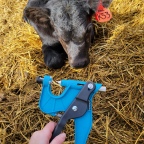
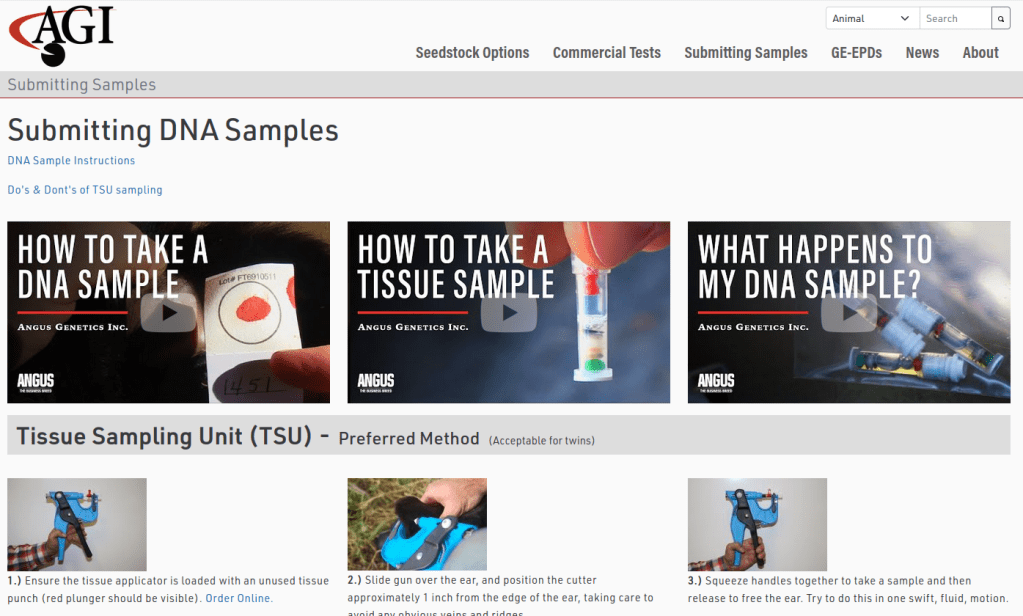
The American Angus Association and Angus Genetics Inc. (AGI) have a great informational page about the different DNA sample collection types and best practices for each. If you have any questions about which sample type may be best for your operation, reach out so we can discuss. Keep in mind, you can apply this logic across any breed association business you work with, it’s not exclusive to black Angus cattle.
https://www.angus.org/agi/submittingsamples
 datageniellc.com